




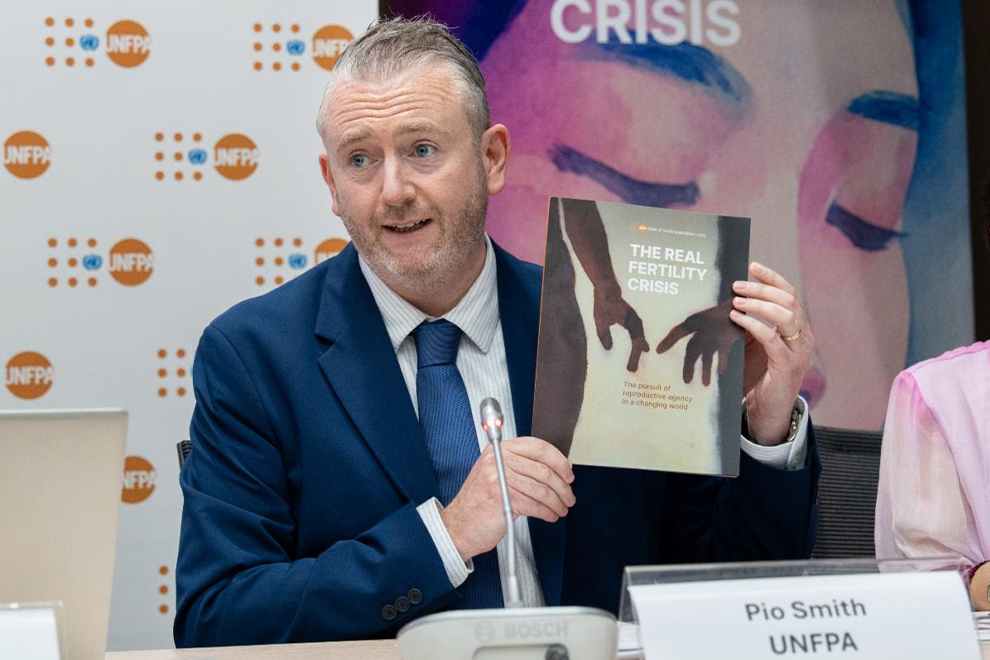
Pio Smith, UNFPA regional director for Asia and the Pacific, at the regional launch of UNFPA's State of World Population Report 2025 in Bangkok on June 25. UNFPA
The United Nations Population Fund (UNFPA) has sounded a clear warning: the real fertility crisis facing Asia and the Pacific is not about numbers — it’s about rights.
During the June 25 launch of its 2025 State of World Population report in Bangkok, UNFPA emphasised that individuals across the region are being denied the freedom to decide whether, when, and how to have children — due to economic insecurity, gender inequality and gaps in access to essential health and social services.
“This isn’t a crisis of ‘too many’ or ‘too few’ births — it’s a crisis of denied choice,” said Pio Smith, UNFPA regional director for Asia and the Pacific, at the Third Asia and the Pacific Ministerial Conference on Civil Registration and Vital Statistics (CRVS).
“We cannot assume that birth rates reflect people’s desires when so many are held back by gender inequality, economic pressure, or lack of access to healthcare, information, and services,” he said.
He noted fertility rates may fluctuate, but the universal right to reproductive freedom must remain constant.
Titled “The Real Fertility Crisis: The Pursuit of Reproductive Agency in a Changing World”, the report explores why many people are unable to meet their fertility aspirations.
Among the main barriers: unaffordable housing, unstable employment and the persistent burden of unpaid caregiving work — especially on women.
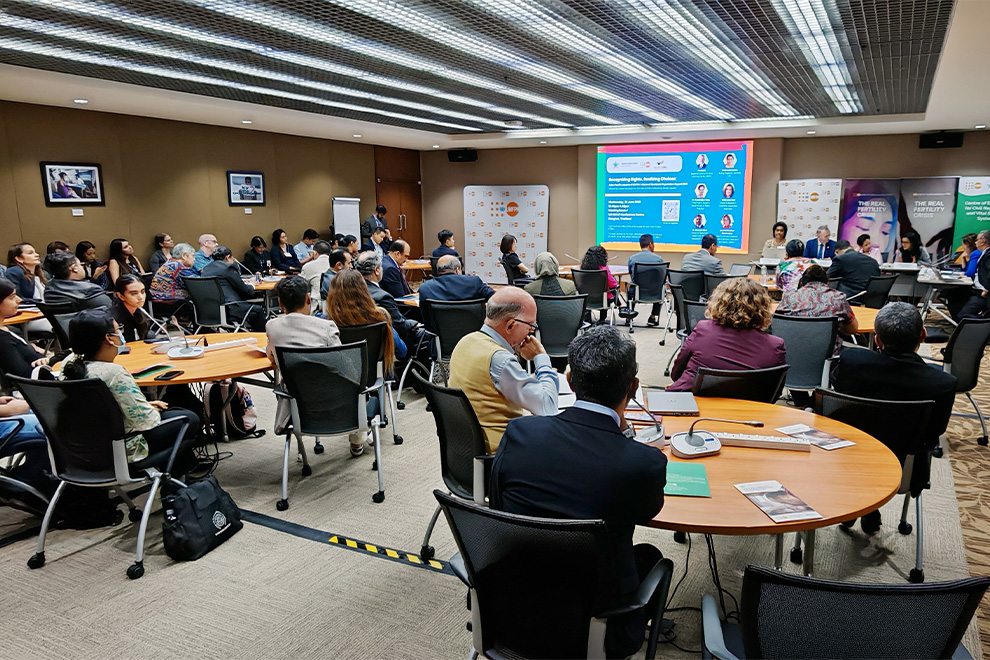
The regional launch of UNFPA's State of World Population Report 2025 at United Nations Conference Center (UNCC), held in Bangkok on June 25. Hong Raksmey
Meanwhile, in other parts of the region, early marriage, stigma and lack of contraceptive access continue to drive unintended pregnancies.
The report presents a nuanced picture across Asia and the Pacific. For example, in South Korea, the world’s lowest fertility rate of 0.8 children per woman is driven by high costs of living and entrenched gender roles.
In contrast, in countries like Samoa and across parts of South and Southeast Asia — including Laos, Nepal and Bangladesh — adolescent birth rates remain high, with some areas reporting over 80 births per 1,000 girls aged 15 to 19.
In Cambodia, too, these intersecting challenges are present. While national reproductive health systems have expanded, disparities persist.
These global trends resonate in diverse national contexts, including Cambodia. With a total population of 17.9 million and a fertility rate of 2.5 children per woman in 2025, Cambodia, like many nations, experiences its own nuanced set of challenges.
Despite a high rate of births attended by skilled health personnel (99 per cent), suggesting strong maternal health infrastructure, the report indicates that 8 per cent of all women aged 15-49, and 11 per cent of married or in-union women in the same age group, still face an unmet need for family planning.
This highlights that even in a country with a fertility rate above the global replacement level, access to preferred contraceptive methods remains a concern for a segment of the population.
“Furthermore, Cambodia's adolescent birth rate stands at 48 per 1,000 girls aged 15-19, pointing to ongoing issues surrounding early pregnancies,” noted the report.
The report also notes that 18 per cent of women aged 20-24 were married or in a union before the age of 18, and 9 per cent of ever-partnered women reported experiencing intimate partner violence in the past year — factors that significantly curtail reproductive agency.
Encouragingly, the report indicates a high degree of decision-making power among married or in-union women in Cambodia regarding sexual relations (91 per cent), contraceptive use (93 per cent) and their own healthcare (92 per cent), suggesting a foundation of autonomy that can be further built upon.
The UNFPA report argues that traditional policy responses, often focused on “population control” or simply boosting birth rates through incentives, are ineffective and can even violate human rights.
Instead, it advocates for a shift towards policies that prioritize “reproductive agency” — a person's ability to make free and informed choices about their reproductive life, unfettered by economic, social or discriminatory constraints.
UNFPA stresses that both lowest and highest birth rate represent a failure of systems to support people’s reproductive choices.
“What we see is not a crisis of birth rates. It is a crisis of systems failing people,” Smith said.
“True reproductive agency requires more than services. It requires education, equality and the power to make informed decisions without stigma or coercion,” he added.
The report also highlights that over 40 per cent of adolescent pregnancies across Asia and the Pacific are unintended, and fewer than one in four unmarried, sexually active adolescents use modern contraception.
UNFPA cautions that these figures are not just statistics — they represent millions of young people whose futures are shaped by limited opportunities and inadequate support.
Smith said too often, individuals are shut out of parenthood or forced into parenthood by unequal systems that restrict their choices.
Across the region, he said, women and girls continue to carry a disproportionate share of unpaid caregiving and domestic work, limiting their economic opportunity and reinforcing gender inequality.
“Women still do four times more unpaid care than men. As populations rapidly age, this burden is increasing, often without the support of adequate social protections or care infrastructure,” he said.
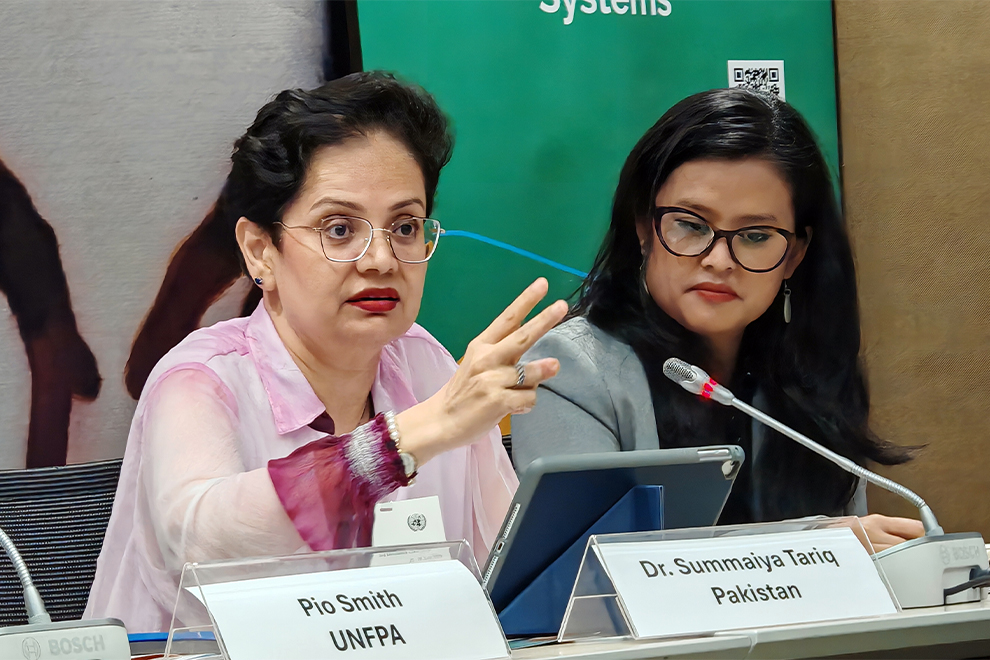
Dr. Summaiya Tariq, chief police surgeon, Government of Sindh, Pakistan, (left) delivered a compelling address during the launch of UNFPA’s 2025 State of World Population report. Hong Raksmey
During the launch, Dr. Summaiya Tariq, chief police surgeon of Sindh, Pakistan, urged countries to recognise the human realities behind the data.
She urged CRVS (Civil Registration and Vital Statistics) systems to look beyond statistics and recognize the human lives behind the data — especially those of women lost to femicide.
“I’m the story behind your numbers. You see ‘one’ — I see a person, a family left behind,” said Tariq.
She noted that many gender-based killings are misclassified and undercounted, calling for CRVS systems to be strengthened to capture such “silent deaths” and to ensure that no woman is forgotten.
“Missing out on female data is not an option — because women are not disposable,” she emphasised.
The report warns against coercive or ineffective policy responses, such as baby bonuses or fertility targets, which fail to address underlying inequalities.
Instead, it calls for a holistic set of measures, including:
- Investment in affordable housing, decent jobs, and parental leave;
- Comprehensive, rights-based sexual and reproductive health services;
- Support for diverse families, including single parents and LGBTQIA+ individuals;
- Reform of workplace norms and social protections to promote gender equality.
UNFPA also underlined the importance of robust CRVS systems to ensure legal identity and access to services.
As seen in Cambodia and elsewhere, inclusive data systems are essential not only for monitoring demographic trends but for upholding basic rights.
“Across Asia and the Pacific, we are working to support youth-friendly health services, affordable care systems and policies that respond to people’s real aspirations,” said Smith.
“Let us stop trying to ‘fix’ fertility — and instead build societies that trust people to shape their own lives with dignity and freedom,” he added.