




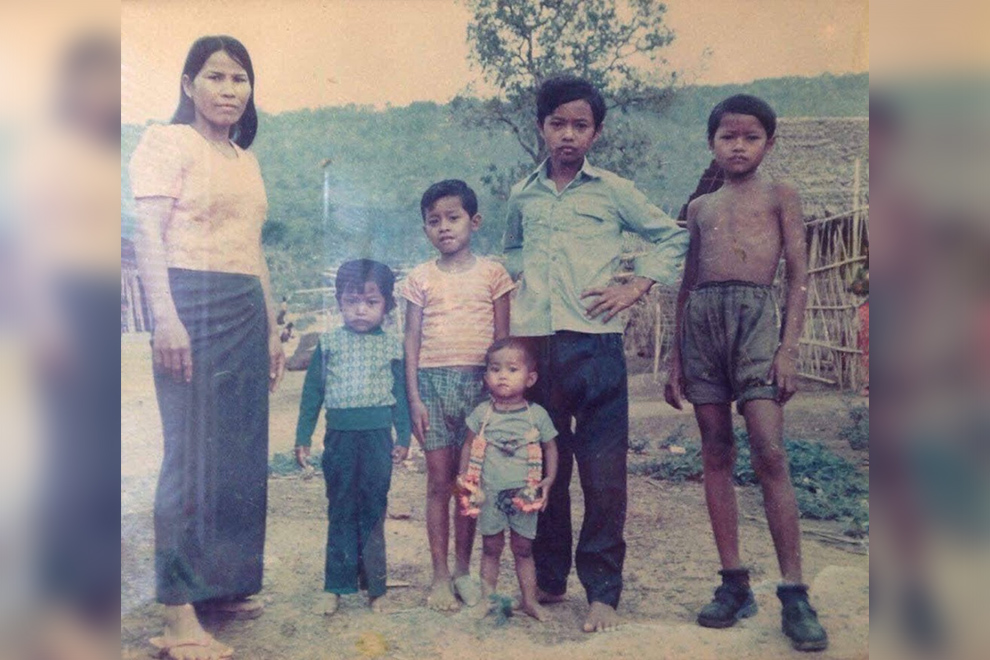
Nguon Chan Mol (far right) and his family in a refugee camp in the early 1980s. DC-Cam
On September 10, I (Long Dany) travelled to Battambang province and conducted an interview with a survivor of the Khmer Rouge regime who once lived in a Cambodian Refugee Camp called Nong Chan. His name is Nguon Chan Mol, also known as Nguon Chandaravong. His life story is as follows.
My name is Nguon Chan Mol, also known as Nguon Chandaravong. I am 60 years old and was born in Chamhuy village, Russey Krang commune, Maung Russey district, Battambang province.
Now, I live in O’ Kcheay village, Prek Preah Sdach commune, in Battambang town.
I am married to Sok Vanny, 50, and we have four children, three daughters and a son.
My father was Ngam Nguon and my mother was Sat Minh. She passed away before the Khmer Rouge regime. I have two older brothers. Later, my father, who is now deceased, remarried and had three more children with his second wife.
During the Khmer Rouge regime (1975–1979), my father served in the Khmer Rouge army in Battambang Town and brought our entire family to live within the military unit in the town’s water basin area. In 1975, I was about 10 years old and lived with my father, who worked as a cook in Military Unit 18.
In 1977, my father’s unit was reassigned to the Traeng area. My older brother also joined Unit 18. In 1978, I fell ill, and my father took me to be treated at hospital P-2. After recovering, my father placed me in the “Great Leap Forward Children Unit” because the unit leader was his comrade. I lived with that unit until the Vietnamese army entered Battambang town in January 1979, at which point I was able to reunite with my family.
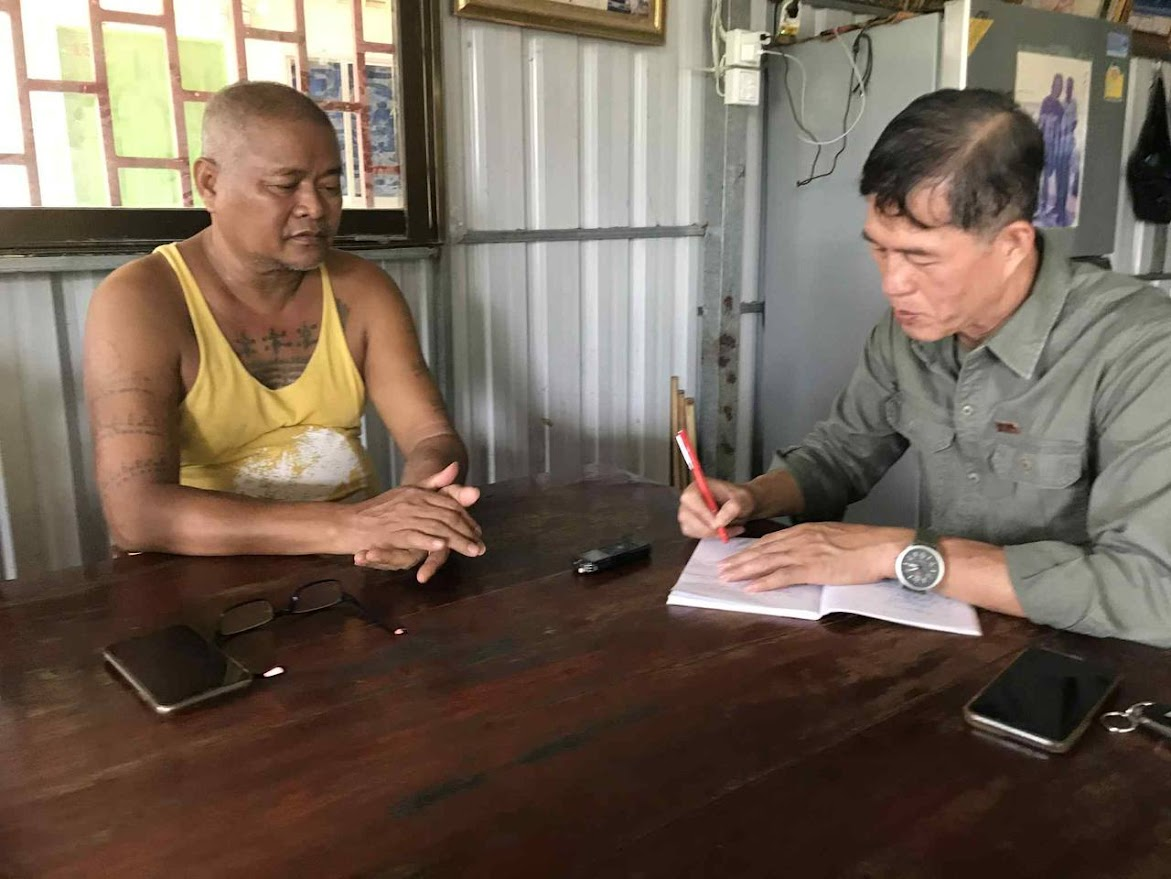
Nguon Chan Mol (left) shares his story with DC-Cam’s Long Dany. DC-Cam
During March or April that same year, my family – this included me, my father, my older brother, my stepmother and three younger siblings – travelled by ox cart along National Road 5 toward Svay Sisophon district. We stopped for one night in Kang-va village and then continued our journey further west towards Thailand.
Along the way, when we encountered Vietnamese troops, my father would always tell them that we were going to get rice for the family. After passing through the Vietnamese troops, my family, along with other Cambodian refugees, reached the first staging area of the Cambodian Freedom Fighter Army known as paratroopers.
They asked my father where we were headed, and he replied that we were going to get rice in Nong Chan Refugee Camp. The soldiers allowed us to continue to the second staging area, and finally we arrived at Nong Chan Refugee Camp, which was in Cambodian territory, opposite Thailand’s Nong Chan village.
At that time, the camp was home to more than 100 families, most of whom were freedom fighter military families, while a smaller portion were refugees. My family decided to settle there.
Both the military families and refugees built temporary shelters on the ground using blue tents. The camp was always crowded whenever trucks delivered rice, canned fish and cooking oil from the UN Border Relief Operation or UNBRO, for monthly distribution to the refugees. Those who came to receive food at Nong Chan included freedom fighter military families, other refugee families and residents who travelled to collect rice before returning to their home villages.
In the early rainy season of 1979, the Thai army began constructing dams and digging canals along the Cambodia–Thailand border, from Nong Chan Refugee Camp all the way to Phnom Chhat.
Thai soldiers set up surveillance posts and patrolled along the tops of these dams. The canals next to the dams on the Cambodian side were about three metres wide, with some sections deep enough to submerge a person’s head, while other areas were only as deep as an average adult’s height. The Thai army left only a passage for UNBRO trucks to bring rice and food from Thai territory into Nong Chan Refugee Camp. Once the trucks passed through, the Thai soldiers blocked refugees from entering Thailand without permission.
Aside from collecting rice and food from UNBRO, the families at the camp had to request permission from Thai soldiers to enter the market or the Thai side of Nong Chan village to purchase shoes, sarongs, clothing and fruit. The refugees would then sell these goods to local smugglers who waited in Nong Chan Camp.
From what I remember, the managers of Nong Chan Refugee Camp were named [grandmother] Kdom-Sak, Lay Virak, Sdoerng and Phnom.
At that time, my father made a living by butchering and selling meat in the Nong Chan Camp.
At the end of 1979, our family moved from Nong Chan to sell meat in Kok Thyung Camp, which was about 2 kilometres away. One day, a Thai soldier assaulted the wife of a freedom fighter soldier on Thai territory.
The wife told her husband about this, which caused her husband to take a gun and fire at the Thai soldier, chasing him back into his own post. About half an hour later, the Thai soldier returned with reinforcements and completely destroyed Kok Thyung Camp. Our family fled back to Nong Chan Refugee Camp. In 1980, our family voluntarily boarded a UNBRO truck and moved to live in Khao-I-Dang Camp.
While living in Khao I-Dang camp, my father took a third wife and eventually fled from Khao-I-Dang to settle in the Rithysen Camp, back in Cambodian territory. During that time, my older brother and I often travelled from Khao-I-Dang to visit and stay with our father in Rithysen, approximately 20 kilometres away.
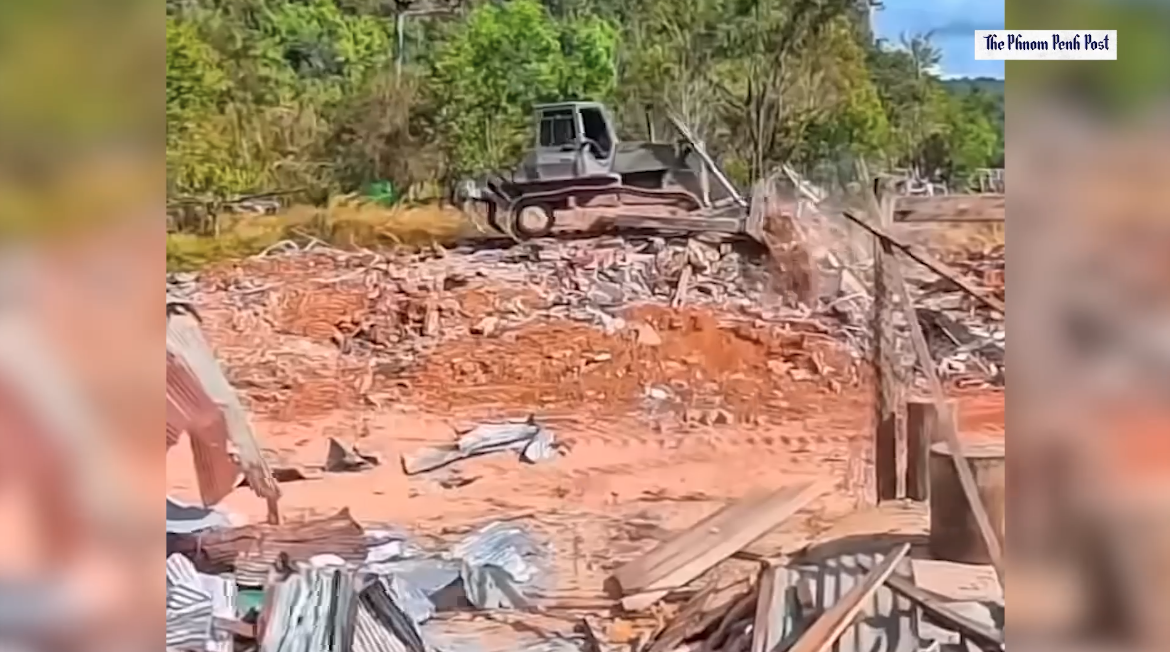
In Rithysen, there was a temple called Seri Temple, also known as Sadok Kok Thom Temple. In 1983, Thai soldiers forced the Cambodian refugees in Rithysen to move further inland inside Cambodia, away from the Sadok Kok Thom Temple area. Afterwards, Thai authorities completely seized the dam and took control of the temple.
Long Dany is director of the Veal Veng Documentation Center of the Documentation Center of Cambodia (DC-Cam). Translated by Lim I-Phing.