




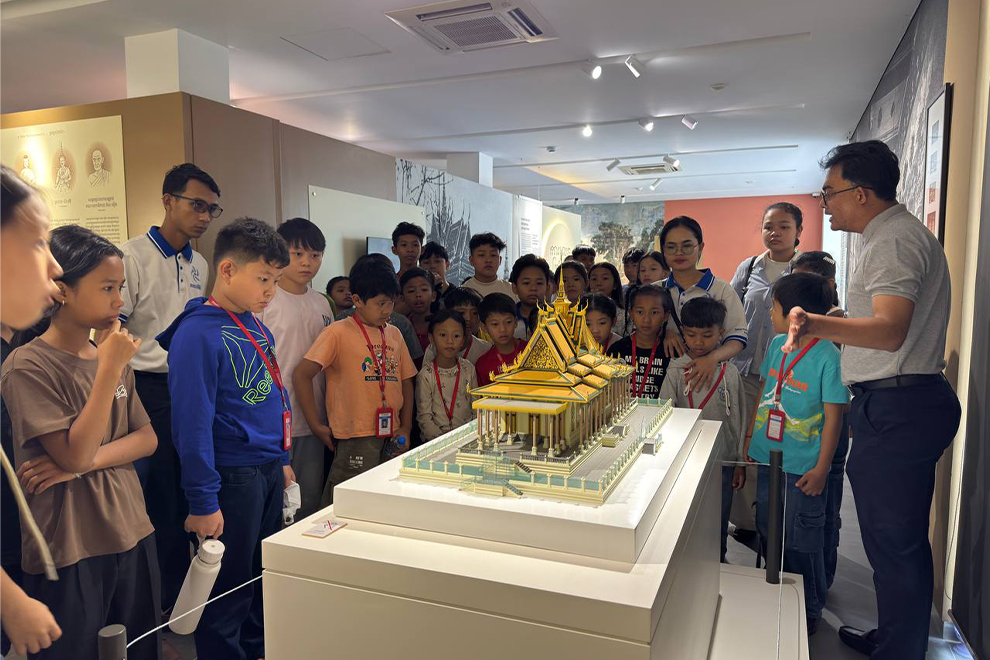
Into the Light: The Retrieved Paintings of Phnom Penh’s Silver Pagoda attracted more than 8,000 people in the two-and-a-half months since the opening. Supplied
More than 8,000 people have visited the SOSORO Museum’s major temporary exhibition Into the Light: The Retrieved Paintings of Phnom Penh’s Silver Pagoda since its opening in early October, underscoring strong public interest in a long-lost chapter of Cambodia’s artistic and spiritual heritage.
Now halfway through its five-month run, the exhibition at the National Bank of Cambodia’s Preah Srey Içanavarman Museum of Economy and Money (SOSORO) has attracted a steady flow of students, families, researchers and cultural enthusiasts.
“This strong attendance reflects the public's remarkable appreciation for the rediscovered murals of the Silver Pagoda’s sanctuary and the unique historical narrative they reveal,” according to SOSORO.
The SOSORO Museum expressed gratitude to His Majesty King Norodom Sihamoni and Her Majesty Queen Mother Norodom Monineath Sihanouk for granting permission to conduct onsite research and documentation, describing the royal authorisation as essential to the realisation of the exhibition.
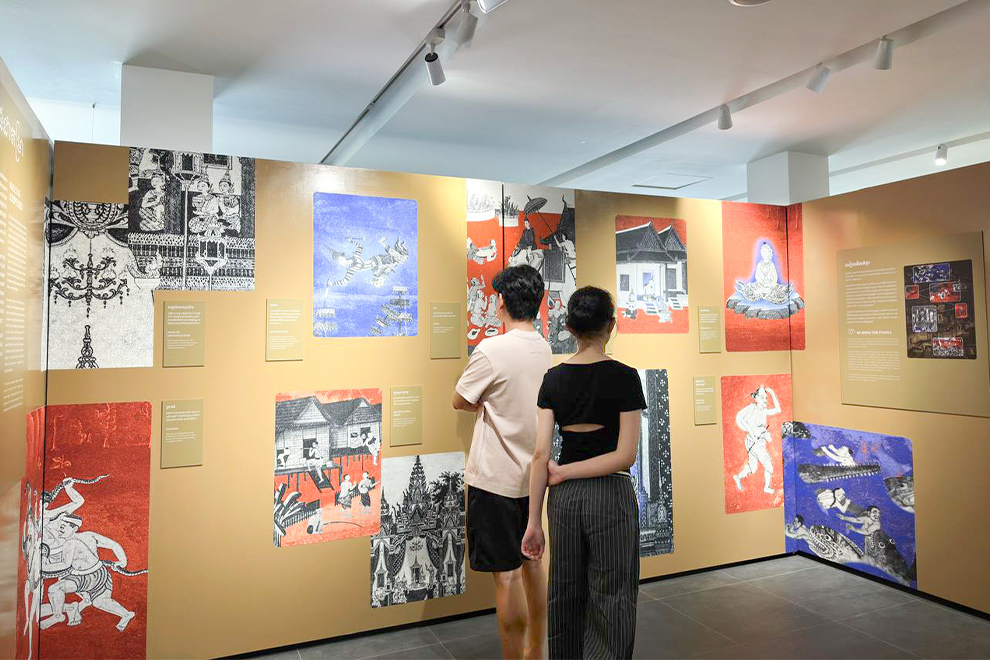
The exhibition centres on early 20th-century murals depicting jātaka scenes — stories of the Buddha’s previous lives. Supplied
According to the museum, the exhibition centres on early 20th-century murals depicting jātaka scenes — stories of the Buddha’s previous lives — which were once considered masterpieces of Khmer religious art.
“Curated with the scientific guidance of Professor Olivier de Bernon, a member of the École française d’Extrême-Orient (EFEO), the exhibition showcases the rediscovery of early 20th-century murals once believed to have disappeared forever, made possible through precious glass-plate negatives lent by Her Royal Highness Princess Norodom Marie,” said SOSORO.
The murals were believed to have disappeared following restoration work in the 1960s and decades of national turmoil.
The exhibition was inaugurated on October 4 at a ceremony presided over by National Bank of Cambodia Governor Chea Serey, attended by members of the royal family, senior government officials, diplomats and cultural figures.
“This exhibition is more than an art display — it’s the recovery of a missing piece of our national memory,” Serey said at the opening ceremony.
“It reconnects us with the spiritual and cultural richness of our past and reminds us of the resilience of Cambodian heritage,” she added.
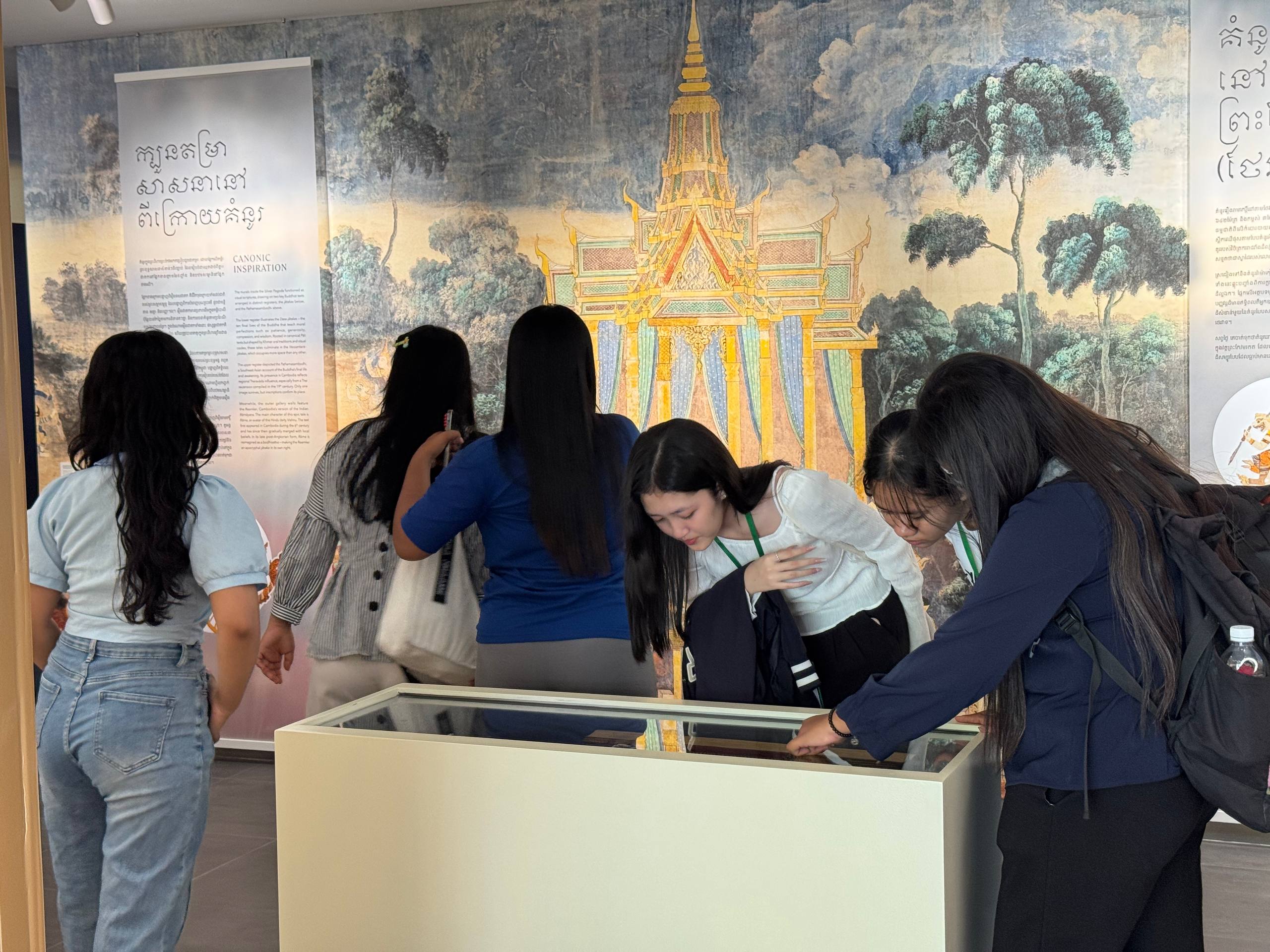
The exhibition attracted a steady flow of students, families, researchers and cultural enthusiasts. Supplied
Through rare photographs, manuscripts and artefacts, the exhibition traces the history of the Silver Pagoda, the disappearance of its murals and their rediscovery through early photographic documentation.
Digital installations allow visitors to interactively explore the glass-plate images, revealing intricate details that would otherwise remain unseen. A special booklet has also been produced to help younger audiences engage with the exhibition through storytelling and visuals.
Located on Street 102, the SOSORO Museum is open to the public free of charge from Tuesday to Sunday, 9am to 6pm.
With several months remaining, museum officials said they hope the exhibition will continue to draw visitors and deepen public understanding of a rediscovered treasure of Cambodia’s Buddhist and artistic legacy.