





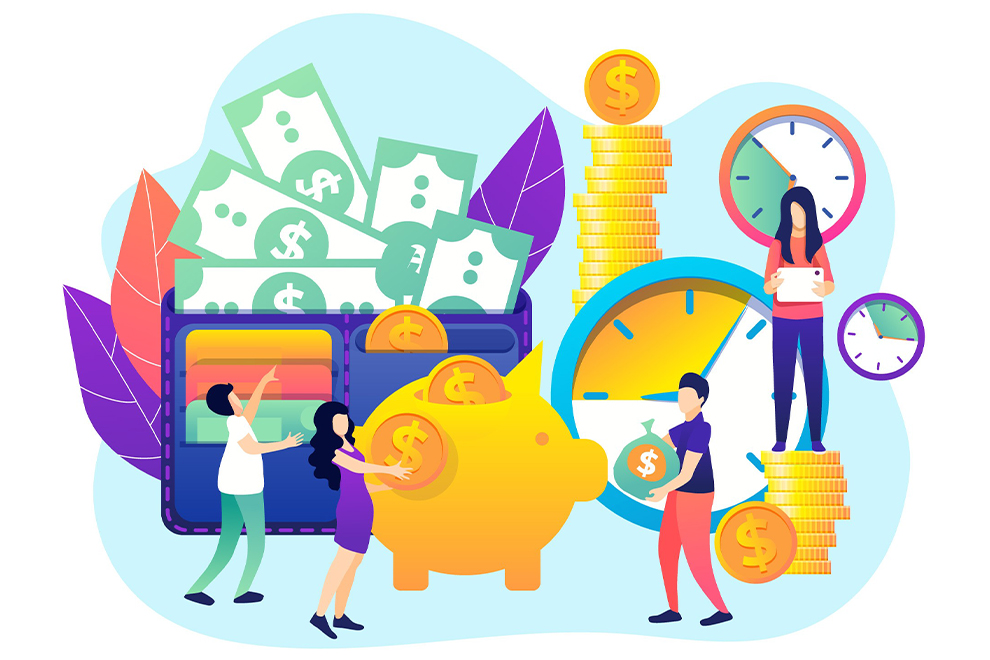
In the digital era where spending has become increasingly convenient, cultivating a saving habit has become more challenging. Using digital payments services instead of cash is becoming a popular and new trend in Cambodia, as it is quick and convenience for daily expenses. Meanwhile saving requires consideration and consistent practice. Is saving money alone sufficient to achieve financial freedom?
What is saving money?
Saving money is a crucial financial discipline that involves putting aside a portion of money regularly whether small or large to achieve short-term financial goals such as emergency expenses, medical treatment or other unexpected situations. Saving also serves as a financial brace that helps reduces risk and enhance stability in daily life.
Saving money can generally be classified into two types:
- Traditional savings refer to keeping money at home which allows for immediate access but exposes to high risks such as inflation, loss or undisciplined spending.
- Modern savings refer to deposits in banks or formal financial institutions which offer greater safety, proper management and generally earn interest.
Therefore, while saving is an essential foundation of financial discipline, relying solely on savings is not enough to protect purchasing power or to achieve long-term financial freedom because inflation can gradually reduce the real value of savings, even if the amount of money remains the same.

What is saving securities through the Dollar-Cost Averaging (DCA) strategy?
Saving securities through the DCA strategy is an investment method in which investors invest a fixed amount of money regularly in a specific financial instrument, regardless of market fluctuations. This strategy helps reduce the risk of investing at high prices and creates long-term investment discipline rather than attempting to predict the market (market timing).
How long should the DCA strategy be implemented to be effective?
Generally, the DCA strategy is most effective when applied over a medium to long-term period, typically from 3 to 5 years or longer. This time horizon allows investors to fully benefit from market fluctuations and the potential of economic growth.
How should investors determine their monthly investment amount?
To successfully implement securities saving, investors should consider the following:
- Calculate total monthly income and expenses.
- Allocate monthly investment amount ranging from 20% to 30% of income, without affecting essential daily living expenses.
- Start with a small amount but invest consistently.
- Adjust the investment amount appropriately if there are changes in income or expense obligations such as an increase in salary or expense burdens.

Saving money and securities
Saving money and securities are not an option to choose one and give up another but rather complementary approaches. Saving money provides a foundation for financial security and responding to urgent expenses, while saving securities is crucial step towards achieving long-term financial goals. Starting to save securities does not require a large initial capital. However, before investing, we should learn and understand the securities market, suitable financial instruments and our own level of acceptable risk.
Saving remains an indispensable foundation for personal financial management. However, it does not fully respond to the impact of inflation or enable the achievement for long-term financial freedom. Incorporating securities saving as part of a comprehensive financial plan is not only a potential option for individuals but also contributes to the development of the securities market in Cambodia and national economic growth.
***Disclaimer: This article has been compiled solely for informative and educational purposes. It is not intended to offer any recommendations or as investment advice. The SERC and SR Digital Media Co., Ltd are not liable for any losses or damages caused by using it in such a way.
Prepared by៖ Securities and Exchange Regulator of Cambodia,
Department of Research, Training, Securities Market Development and International Relations
Email៖ [email protected]
Telephone៖ 023 855 611